
The global footwear industry is entering an era defined by convergence. Athletic engineering blends seamlessly with haute couture aesthetics. Rugged utility intersects with metropolitan sophistication. Sustainability merges with futuristic design philosophies. Within this rapidly transforming landscape, Hybrid Footwear Fashion 2026 has emerged as one of the most compelling movements reshaping contemporary style culture.
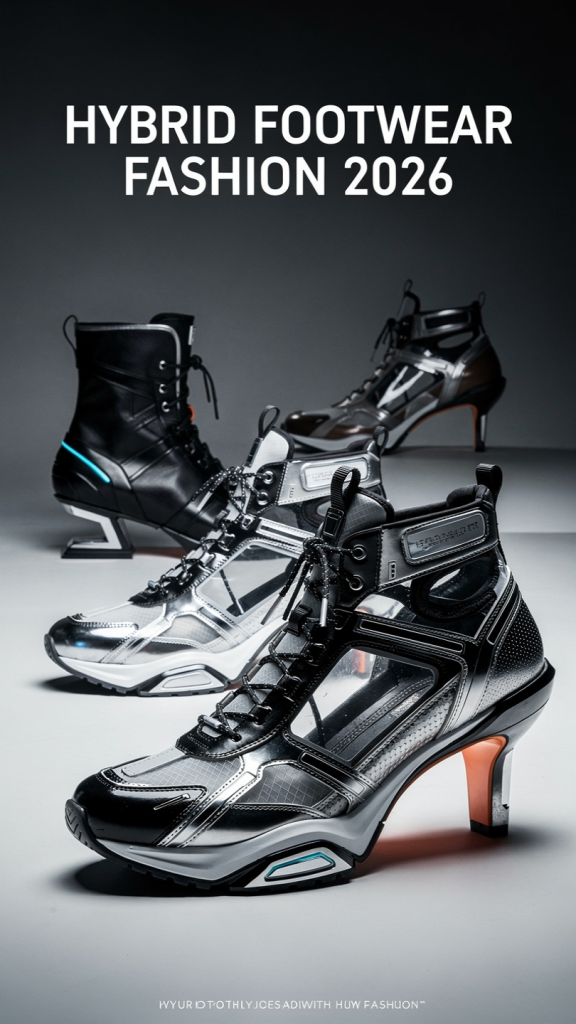
Footwear is no longer confined to singular identities. Sneakers borrow elements from hiking boots. Loafers incorporate performance midsoles. Sandals adopt tactical silhouettes. Formal shoes integrate ergonomic cushioning systems once exclusive to elite sportswear. The result is a new generation of multifaceted footwear designed for versatility, adaptability, and visual intrigue.
Consumers today inhabit increasingly fluid lifestyles. A single day may include remote work, urban commuting, fitness activities, social gatherings, and spontaneous travel. Traditional footwear categories struggle to accommodate such dynamic routines. Consequently, Hybrid Footwear Fashion 2026 answers a growing demand for shoes capable of traversing multiple environments without compromising style or comfort.
This transformation extends beyond utility alone. It represents a broader philosophical shift within fashion itself. The boundaries between luxury, streetwear, outdoor gear, and athletic design continue dissolving at astonishing speed.
The Rise of Hybridization in Modern Fashion
Fashion cycles once revolved around rigid categorization. Athletic shoes belonged to gyms and courts. Formal shoes occupied professional settings. Outdoor boots remained reserved for rugged terrain. These distinctions have eroded dramatically over the last decade.
The acceleration of hybrid fashion reflects evolving cultural values. Consumers increasingly prioritize flexibility over convention. They seek garments and accessories capable of adapting to diverse social contexts.
This evolution forms the foundation of Hybrid Footwear Fashion 2026.
Hybrid footwear does not merely combine aesthetics superficially. Instead, it synthesizes functionality, material innovation, ergonomic engineering, and stylistic experimentation into cohesive products. The modern consumer expects shoes to provide:
- All-day comfort
- Weather adaptability
- Distinctive aesthetics
- Lightweight performance
- Sustainability considerations
- Digital-age visual appeal
- Durability for varied environments
Meeting all these expectations simultaneously requires unprecedented design ingenuity.
Technology as the Catalyst
Advanced manufacturing technologies play a central role in the expansion of Hybrid Footwear Fashion 2026. Innovations once limited to specialized athletic industries now influence mainstream footwear construction.
Adaptive Cushioning Systems
Modern hybrid shoes frequently incorporate responsive foam compounds capable of adjusting pressure distribution dynamically. These systems reduce fatigue while maintaining structural support.
Traditional formal footwear often sacrificed comfort for elegance. Hybrid designs eliminate that compromise.
Today’s consumers demand biomechanical intelligence beneath visually refined exteriors.
3D Knitting and Seamless Construction
Seamless uppers have revolutionized footwear ergonomics. Precision-engineered knitting technologies reduce unnecessary weight while enhancing breathability and flexibility.
This innovation contributes significantly to the futuristic aesthetic associated with Hybrid Footwear Fashion 2026. Shoes appear sculptural rather than conventionally assembled.
The resulting silhouettes often resemble wearable architecture.
Smart Material Integration
Material science continues redefining footwear possibilities. Thermoreactive fabrics, water-resistant membranes, antimicrobial linings, and recycled composites increasingly dominate contemporary design.
Some hybrid footwear models now incorporate self-adjusting fit mechanisms and temperature-regulating interiors. Such innovations blur the distinction between fashion accessory and wearable technology.
The Influence of Outdoor Culture
One of the defining visual characteristics of Hybrid Footwear Fashion 2026 is the profound influence of outdoor exploration aesthetics.
Trail-running shoes, alpine boots, and tactical gear have migrated from wilderness environments into mainstream urban fashion. Lugged soles, utility straps, weatherproof textiles, and technical lacing systems now appear regularly in luxury collections and streetwear collaborations alike.
This phenomenon reflects broader cultural fascinations with resilience, adaptability, and survivalist visual language.
Urban consumers increasingly romanticize outdoor functionality, even within metropolitan settings. Technical footwear communicates preparedness and durability in an uncertain world.
Consequently, hybrid footwear often combines:
- Aggressive traction systems
- Sleek minimalist uppers
- Futuristic paneling
- Utility-inspired hardware
- Lightweight performance construction
The juxtaposition creates aesthetic tension. Ruggedness meets refinement.
That contrast defines much of the allure surrounding Hybrid Footwear Fashion 2026.
Minimalism Versus Maximalism
An intriguing duality exists within contemporary hybrid footwear trends. Some designers pursue radical minimalism, while others embrace extravagant maximalist experimentation.
Minimalist Hybrid Design
Minimalist hybrid footwear emphasizes clean lines, tonal palettes, and subtle technological integration. These designs often feature hidden performance systems beneath deceptively simple exteriors.
Neutral colorways dominate this category:
- Stone gray
- Sand beige
- Matte black
- Off-white
- Olive green
Such palettes enhance versatility while reinforcing understated sophistication.
Minimalist interpretations of Hybrid Footwear Fashion 2026 appeal particularly to consumers seeking longevity over seasonal trend dependency.
Maximalist Hybrid Design
Conversely, maximalist hybrid footwear celebrates visual complexity. Exaggerated midsoles, asymmetrical layering, unconventional materials, and vibrant contrasts create striking visual impact.
These designs often resemble conceptual art pieces more than traditional shoes.
Chunky proportions remain influential, though newer interpretations emphasize sculptural elegance rather than mere bulkiness. Transparency effects, metallic accents, and biomechanical inspirations further amplify futuristic aesthetics.
The maximalist dimension of Hybrid Footwear Fashion 2026 caters to consumers who view footwear as personal exhibitionism and cultural signaling.
Sustainability and Ethical Innovation
Environmental consciousness has become inseparable from contemporary fashion discourse. Hybrid footwear brands increasingly prioritize ecological responsibility alongside visual innovation.
Consumers now scrutinize production methods with greater intensity. Ethical sourcing, recyclable materials, reduced carbon emissions, and circular manufacturing systems influence purchasing decisions substantially.
As a result, Hybrid Footwear Fashion 2026 incorporates sustainability through multiple strategies.
Recycled Material Ecosystems
Many hybrid shoes now utilize recycled ocean plastics, repurposed rubber compounds, biodegradable foams, and plant-derived textiles.
These materials no longer appear inferior aesthetically. Advances in manufacturing allow sustainable components to rival or exceed conventional materials in durability and visual refinement.
Modular Construction
Some brands experiment with modular footwear systems that allow individual components to be replaced rather than discarding entire shoes.
Replaceable soles, detachable uppers, and interchangeable cushioning units reduce waste dramatically while extending product lifespan.
Slow Fashion Influence
Consumers increasingly reject disposable fast-fashion cycles. Hybrid footwear designed for adaptability naturally aligns with slow-fashion principles.
A single pair capable of functioning across multiple environments reduces unnecessary consumption.
This practicality enhances the cultural momentum behind Hybrid Footwear Fashion 2026.
Gender Fluidity in Footwear Design
Another defining characteristic of the hybrid footwear movement is the erosion of rigid gender distinctions.
Traditional footwear categories often relied heavily upon binary design conventions. Contemporary hybrid aesthetics increasingly prioritize silhouette experimentation and individual expression over conventional gender coding.
This shift reflects broader cultural transformations surrounding identity and fashion freedom.
Chunky soles appear in elegant minimalist compositions. Delicate detailing merges with tactical structures. Oversized forms coexist alongside streamlined elegance.
Within Hybrid Footwear Fashion 2026, design language becomes increasingly inclusive and adaptable.
Consumers seek emotional resonance rather than restrictive categorization.
Luxury Brands and Streetwear Convergence
Luxury fashion houses and streetwear labels continue influencing each other profoundly. Hybrid footwear represents one of the clearest manifestations of this convergence.
Luxury brands now incorporate performance technologies historically associated with sportswear giants. Simultaneously, athletic companies adopt premium craftsmanship techniques traditionally linked to luxury fashion.
This cross-pollination fuels the rapid evolution of Hybrid Footwear Fashion 2026.
Collaborative culture accelerates experimentation. Designers blend disparate references:
- Mountaineering gear
- Futuristic sportswear
- Classic tailoring
- Military utility aesthetics
- Japanese minimalism
- Cyberpunk visual motifs
The resulting footwear transcends simplistic categorization.
The Psychological Appeal of Hybrid Footwear
Footwear communicates identity with remarkable immediacy. Hybrid shoes amplify this communicative power by embodying versatility itself.
Consumers increasingly desire products reflecting multidimensional lifestyles. Hybrid footwear symbolizes adaptability, mobility, and contemporary sophistication.
Wearing hybrid footwear subtly communicates readiness for unpredictability.
That psychological resonance explains much of the growing popularity surrounding Hybrid Footwear Fashion 2026.
These shoes project competence. They imply efficiency without sacrificing creativity.
In uncertain social and economic climates, such symbolism becomes deeply attractive.
Urban Mobility and Functional Design
Modern cities demand relentless mobility. People walk longer distances, utilize mixed transportation systems, and transition constantly between environments.
Traditional footwear often struggles within these conditions.
Hybrid footwear addresses urban movement directly through:
- Shock-absorbing midsoles
- Lightweight construction
- Slip-resistant traction
- Breathable interiors
- Water-resistant exteriors
- Ergonomic support systems
These features enhance practicality while preserving stylistic sophistication.
Consequently, Hybrid Footwear Fashion 2026 reflects the realities of modern urban existence more accurately than many previous footwear paradigms.
Digital Culture and Visual Virality
Social media profoundly shapes contemporary fashion dynamics. Footwear now functions not only physically but digitally.
Shoes must photograph well. They must appear distinctive within compressed mobile interfaces. Visual uniqueness increases online engagement dramatically.
Hybrid footwear excels within digital environments because its unconventional silhouettes naturally attract attention.
Angular forms, exaggerated textures, layered materials, and futuristic proportions create strong visual memorability.
This digital compatibility significantly accelerates the popularity of Hybrid Footwear Fashion 2026 across platforms dominated by image-driven culture.
Comfort as Luxury
One of the most important philosophical changes within modern fashion is the redefinition of luxury itself.
Historically, discomfort often signaled prestige. Tight tailoring, rigid materials, and impractical silhouettes dominated luxury aesthetics for decades.
Contemporary consumers increasingly reject that paradigm.
Today, comfort represents sophistication rather than compromise.
Hybrid footwear embodies this transformation perfectly. Advanced cushioning, ergonomic support, and lightweight flexibility coexist with visually refined design.
The modern consumer no longer wishes to choose between elegance and physical ease.
Hybrid Footwear Fashion 2026 thrives precisely because it eliminates that false dichotomy.
Experimental Silhouettes and Future Aesthetics
Many hybrid footwear designers draw inspiration from speculative futurism. Science fiction, industrial architecture, automotive engineering, and biomechanical forms influence modern silhouettes extensively.
Some shoes resemble exoskeletal structures. Others mimic aerodynamic vehicles or geological formations.
This experimental approach contributes to the artistic dimension of Hybrid Footwear Fashion 2026.
Fashion increasingly functions as experiential storytelling rather than mere decoration. Hybrid footwear allows designers to imagine future lifestyles through wearable objects.
These conceptual influences generate footwear that feels simultaneously functional and visionary.
Consumer Behavior and Longevity
The purchasing psychology surrounding footwear has evolved considerably.
Consumers now favor investment-oriented purchases over impulsive accumulation. Multifunctional products possess greater perceived value because they justify higher prices through versatility.
Hybrid footwear aligns perfectly with this mindset.
A shoe capable of functioning in professional settings, casual environments, travel situations, and light outdoor activity offers remarkable utility.
Consequently, Hybrid Footwear Fashion 2026 reflects broader economic pragmatism alongside aesthetic innovation.
Versatility becomes aspirational.
The Influence of Asian Fashion Markets
Asian fashion markets exert enormous influence on global footwear trends. Japanese technical minimalism, South Korean streetwear innovation, and Chinese digital fashion ecosystems significantly shape hybrid design philosophies.
Layered styling, futuristic utility aesthetics, and experimental proportions frequently emerge from these cultural environments before spreading globally.
The internationalization of fashion accelerates hybrid experimentation dramatically.
Consumers worldwide now encounter diverse stylistic influences instantly through digital platforms, contributing to the rapid expansion of Hybrid Footwear Fashion 2026.
Footwear as Cultural Architecture
Contemporary hybrid shoes increasingly resemble architectural objects.
Layered midsoles evoke structural engineering. Geometric paneling recalls modernist buildings. Technical materials create industrial textures. Sculptural forms challenge conventional notions of proportion.
This architectural quality elevates footwear beyond mere accessory status.
Shoes become portable design statements.
Such artistic ambition distinguishes Hybrid Footwear Fashion 2026 from previous footwear movements focused primarily on trend replication.
The Future of Hybrid Footwear
The trajectory of hybrid footwear suggests continued expansion across virtually every segment of the fashion industry.
Future developments may include:
- AI-assisted ergonomic customization
- Biodegradable performance materials
- Integrated wearable technology
- Personalized cushioning systems
- Climate-adaptive construction
- Modular aesthetic transformation
As technology advances, footwear will likely become increasingly responsive and personalized.
Yet despite these innovations, the central appeal of Hybrid Footwear Fashion 2026 remains deeply human: adaptability.
Consumers seek products capable of reflecting complex lifestyles without imposing restrictive categorization.
Hybrid footwear answers that desire elegantly.
Conclusion
Hybrid Footwear Fashion 2026 represents far more than a temporary trend. It signifies a fundamental transformation in how consumers perceive style, comfort, utility, and identity.
The boundaries separating athletic footwear, luxury fashion, outdoor functionality, and urban sophistication continue dissolving rapidly. In their place emerges a new paradigm centered on flexibility, multidimensionality, and intelligent design.
Technological innovation fuels this evolution through advanced materials, ergonomic engineering, and sustainable manufacturing systems. Simultaneously, cultural shifts toward comfort, individuality, and environmental consciousness reshape consumer expectations profoundly.
Hybrid footwear reflects modern existence itself — dynamic, mobile, interconnected, and increasingly resistant to rigid classification.
Whether expressed through minimalist elegance or maximalist futurism, the movement continues redefining the visual and functional possibilities of contemporary footwear.
As fashion advances deeper into the intersection of technology and lifestyle adaptability, Hybrid Footwear Fashion 2026 stands at the forefront of a new era where shoes are no longer confined to singular purposes or identities.
They become tools, statements, architectural objects, and cultural symbols simultaneously.
And that convergence may ultimately define the future of fashion itself.
You may also like
-
The Beauty & Skincare Glow Shift: How Tiny Tweaks Can Unlock Your Skin’s Hidden Brilliance
-
The Beauty & Skincare Glow Equation: How to Balance Ingredients, Lifestyle, and Science for Skin That Shines
-
The Beauty & Skincare Glow Matrix: How to Sync Your Routine with Your Skin’s Natural Rhythm
-
The Beauty & Skincare Mindset: How Psychological Shifts Can Unlock Your Skin’s Full Potential
-
The Beauty & Skincare Glow Formula: How to Nourish Your Skin from Within for Lasting Radiance