Introduction: Beyond Products, Toward Identity
The term beauty supply evokes more than shelves lined with cosmetics and haircare essentials. It represents an intricate ecosystem—one that intertwines personal identity, cultural expression, commerce, and self-care rituals. From bustling urban storefronts to curated online boutiques, the beauty supply industry has evolved into a multifaceted domain that reflects both societal trends and deeply individual choices.
This landscape is not merely transactional. It is experiential. It is aspirational. It is, in many ways, transformational.
The Historical Undercurrent of Beauty Commerce
Tracing the origins of beauty supply reveals a fascinating lineage. Ancient civilizations—from Egypt to Mesopotamia—utilized rudimentary cosmetics made of crushed minerals and botanical extracts. Kohl-lined eyes, perfumed oils, and pigmented balms were not just aesthetic choices but symbols of status, spirituality, and protection.
Fast forward to the industrial era, and the beauty supply market began to formalize. Mass production enabled accessibility, while branding introduced emotional resonance. Beauty became democratized, albeit unevenly, with certain communities still underserved—a gap that would later catalyze specialized beauty supply stores catering to diverse needs.
The Anatomy of a Modern Beauty Supply Store
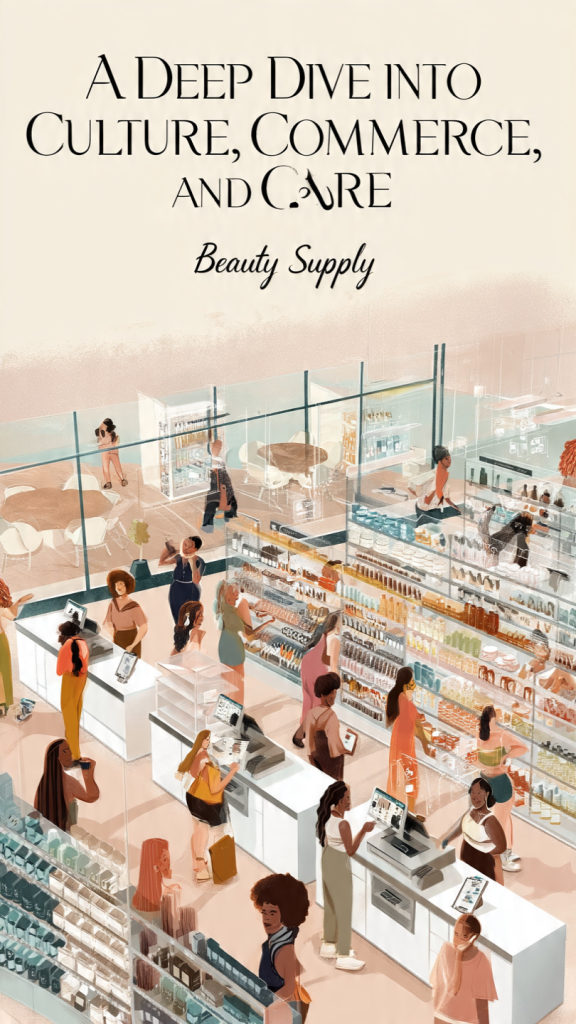
A contemporary beauty supply store is a curated microcosm of the beauty universe. It typically encompasses:
- Haircare products (shampoos, conditioners, treatments)
- Styling tools (flat irons, curling wands, diffusers)
- Cosmetics (foundations, lipsticks, palettes)
- Skincare formulations (serums, moisturizers, exfoliants)
- Accessories (brushes, wigs, extensions)
Yet, what distinguishes a truly exceptional beauty supply outlet is not just inventory breadth but intentional curation. Products are often selected based on demographic specificity—curl patterns, skin undertones, or cultural preferences—creating a sense of belonging for customers who may feel overlooked in mainstream retail.
Cultural Significance and Representation
The beauty supply sector has played a pivotal role in amplifying representation. Particularly within marginalized communities, these stores serve as sanctuaries of self-expression.
For instance, textured hair—historically underrepresented in global beauty narratives—finds robust acknowledgment within specialized beauty supply environments. Products designed for coils, kinks, and waves are not relegated to obscure corners but celebrated as central offerings.
This cultural resonance transforms the beauty supply experience into something deeply affirming. It is not just about purchasing products; it is about reclaiming narratives and embracing authenticity.
The Psychology of Beauty Consumption
Consumer behavior within the beauty supply domain is intriguingly complex. Purchases are often influenced by a confluence of factors:
- Emotional states (seeking confidence or renewal)
- Social influences (trends, influencers, peer validation)
- Sensory appeal (textures, fragrances, packaging aesthetics)
The act of browsing a beauty supply store can itself be therapeutic. The tactile engagement with products, the olfactory stimulation, and the visual allure create a multisensory journey that transcends mere acquisition.
Moreover, beauty routines derived from these products often become rituals—structured moments of self-care that foster mindfulness and personal connection.
The Rise of Digital Beauty Supply Platforms
In recent years, the digital transformation of beauty supply has been nothing short of seismic. E-commerce platforms now offer expansive catalogs, algorithm-driven recommendations, and user-generated reviews.
Virtual try-on technologies, powered by augmented reality, allow consumers to experiment with shades and styles from the comfort of their homes. This convergence of technology and beauty has redefined accessibility, enabling even niche products to reach global audiences.
However, this digital shift does not render physical beauty supply stores obsolete. Instead, it creates a hybrid ecosystem where online convenience complements in-store experience.
Ingredient Consciousness and Ethical Consumption
Modern consumers exhibit heightened awareness regarding product composition. The beauty supply industry has responded with a proliferation of:
- Sulfate-free shampoos
- Paraben-free cosmetics
- Vegan and cruelty-free formulations
- Organic and sustainably sourced ingredients
This shift reflects a broader ethical paradigm. Purchasing decisions within the beauty supply space are increasingly guided by environmental stewardship and social responsibility.
Transparency has become paramount. Labels are scrutinized. Brand ethos matters. The beauty supply market, once dominated by superficial appeal, now demands substantive integrity.
Entrepreneurship Within the Beauty Supply Sector
The beauty supply industry has also emerged as a fertile ground for entrepreneurship. Independent brands—often founded by individuals addressing gaps in the market—have gained significant traction.
These entrepreneurs bring authenticity and innovation, introducing products tailored to specific needs that larger corporations may overlook. From artisanal skincare lines to bespoke haircare solutions, the entrepreneurial spirit invigorates the beauty supply landscape with diversity and dynamism.
Retail ownership, too, presents opportunities. Local beauty supply stores often function as community hubs, fostering relationships that extend beyond commerce.
Challenges and Critiques
Despite its vibrancy, the beauty supply industry is not without challenges. Issues such as:
- Supply chain disruptions
- Product authenticity concerns
- Pricing disparities
- Cultural appropriation
continue to surface.
Additionally, representation within ownership structures has been a topic of discourse. In some regions, communities that predominantly consume beauty supply products are underrepresented among store proprietors, prompting conversations حول equity and inclusion.
Addressing these challenges requires systemic shifts—both within corporate frameworks and consumer consciousness.
The Sensory Language of Beauty Supply
There is an almost poetic dimension to the beauty supply experience. Consider the lexicon:
- Emollients that “caress” the skin
- Pigments that “illuminate” complexions
- Serums that “revitalize” and “restore”
This language is not accidental. It constructs an emotional narrative that elevates products from functional items to transformative agents.
In this sense, the beauty supply industry operates at the intersection of science and storytelling. Formulations are grounded in chemistry, yet marketed through evocative imagery and aspirational promises.
The Role of Education and Expertise
An often-overlooked aspect of the beauty supply ecosystem is education. Knowledgeable staff can significantly enhance customer experience by offering guidance on:
- Product compatibility
- Application techniques
- Hair and skin diagnostics
Workshops, tutorials, and consultations further enrich this educational dimension. Informed consumers are empowered consumers—and the beauty supply industry thrives when knowledge dissemination is prioritized.
Globalization and Cross-Cultural Exchange
Globalization has infused the beauty supply market with unprecedented diversity. Korean skincare routines, French pharmacy staples, African botanical oils, and Japanese minimalist formulations coexist within the same retail spaces.
This cross-cultural exchange fosters innovation. Ingredients and techniques traverse borders, creating hybrid products that encapsulate global influences.
However, it also necessitates cultural sensitivity. Respectful representation and acknowledgment of origins are crucial in maintaining ethical integrity within the beauty supply domain.
Sustainability: The Imperative of the Future
Sustainability is no longer optional—it is imperative. The beauty supply industry faces mounting pressure to reduce its environmental footprint.
Key initiatives include:
- Refillable packaging systems
- Biodegradable materials
- Reduced water consumption in formulations
- Ethical sourcing practices
Consumers are increasingly aligning with brands that demonstrate genuine commitment to sustainability. As such, the future of beauty supply will likely be defined by ecological mindfulness as much as aesthetic innovation.
Personalization and the Era of Bespoke Beauty
One of the most compelling trends within beauty supply is personalization. Advances in data analytics and biotechnology have enabled the creation of customized products tailored to individual profiles.
Skin analysis tools, DNA-based formulations, and adaptive cosmetics represent the frontier of this evolution. The notion of one-size-fits-all is gradually being supplanted by bespoke solutions.
This paradigm shift underscores a fundamental truth: beauty is inherently individual. The beauty supply industry, at its best, recognizes and celebrates this uniqueness.
The Emotional Resonance of Beauty Supply
Ultimately, the significance of beauty supply extends beyond physical appearance. It touches upon self-esteem, identity, and emotional well-being.
A new lipstick can evoke confidence. A nourishing hair treatment can restore not just strands but self-assurance. These seemingly small transformations accumulate, shaping how individuals perceive themselves and interact with the world.
In this context, the beauty supply industry assumes a quasi-therapeutic role—facilitating moments of renewal and self-discovery.
Conclusion: A Dynamic and Ever-Evolving Landscape
The world of beauty supply is vast, intricate, and perpetually evolving. It encompasses history, culture, science, and emotion in equal measure. It is an industry driven not only by innovation but by the enduring human desire to express, enhance, and understand oneself.
As trends shift and technologies advance, one constant remains: the profound connection between beauty and identity. The beauty supply sector, in all its complexity, continues to serve as both a mirror and a catalyst—reflecting who people are while enabling who they aspire to become.
In navigating this landscape, one does not merely purchase products. One engages in a dialogue with self-image, culture, and possibility. And within that dialogue lies the true essence of beauty supply.
You may also like
-
Structured Data and Beauty Discovery: Making Online Advice Easier to Trust
-
The Beauty & Skincare Glow Shift: How Tiny Tweaks Can Unlock Your Skin’s Hidden Brilliance
-
The Beauty & Skincare Glow Equation: How to Balance Ingredients, Lifestyle, and Science for Skin That Shines
-
The Beauty & Skincare Glow Matrix: How to Sync Your Routine with Your Skin’s Natural Rhythm
-
The Beauty & Skincare Mindset: How Psychological Shifts Can Unlock Your Skin’s Full Potential